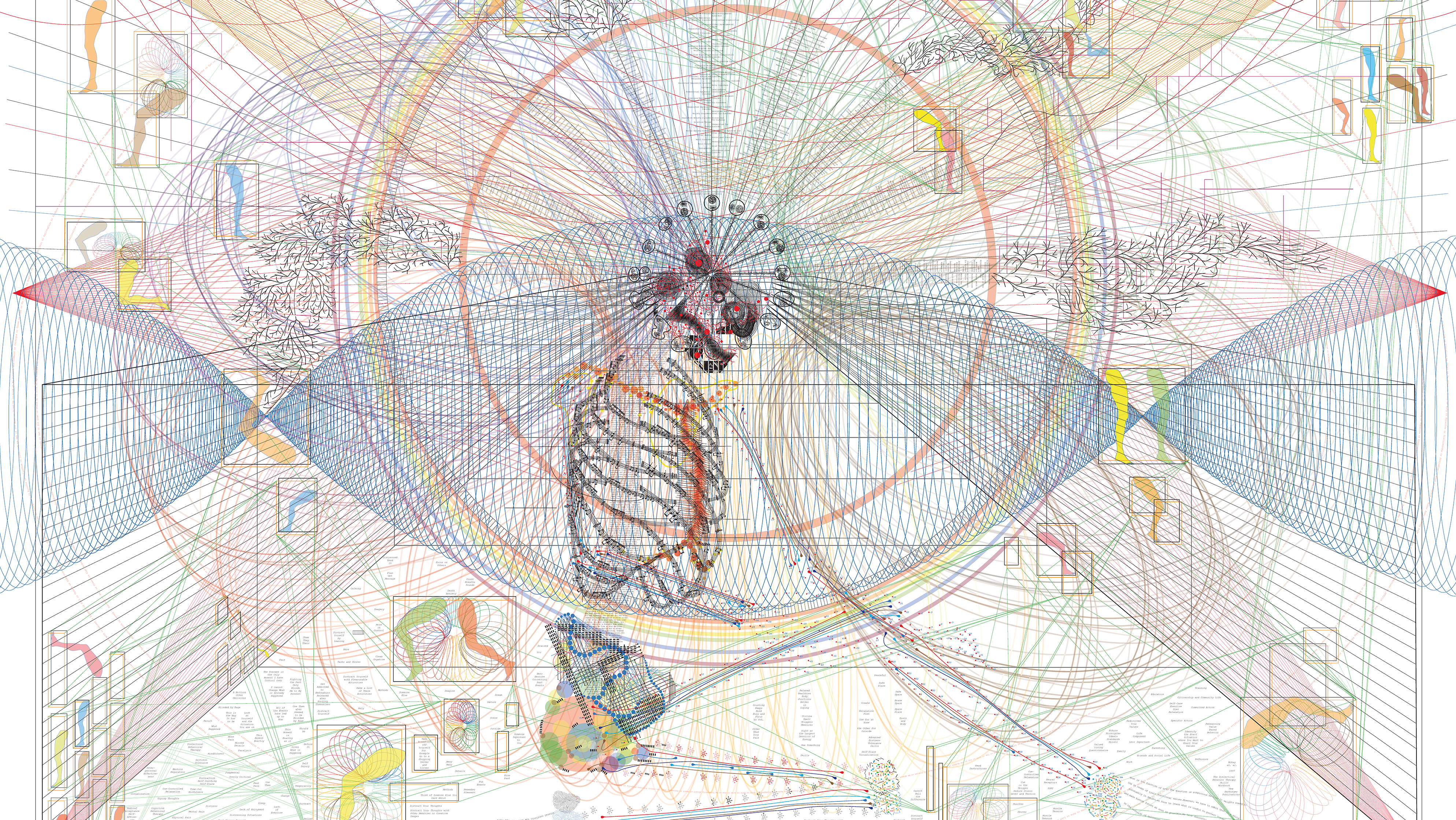
I never live
Maybe I overuse my brain. Will exercise connect my thoughts and feelings to the world through parasympathetic neurons?
Transference, transgression, repression, and overcompensation…all these vocabularies can be expressed in art. Audiences have suppressed desires and twisted worries, so I invent visual art, images, moving images, and sound, to represent the scenarios for them, so they don’t have to enact the dangerous desires and suppressed tensions themselves. We dream for them. The use of dreams is to visualize events without their unpleasurable causations.
I no longer want entertainment. Movies, music, and buying, I feel they have “no use”. What is meaningfulness? I am so indulged in consumerism’s definitions of behaviors that I weigh everything on the scale of whether they make me a more productive producer. Mom says sometimes meanings lie on the surface of experiencing events. In this short life I die soon, so instead of being obsessed with only doing productive things, why not pursue peace through experiences? I want to live somewhere else – I have achieved; I want to study art – I have made it. Both logic is paradoxical, as I will never be fulfilled either way. I am doomed to live with pain. If there is no pain, I will create it.
I said I constantly need to learn something, to produce something, to do something more meaningful than ordinary everyday living, eating, sleeping, and shitting. This thing I desire is the object petit a, the thing I will never reach but forever wander around it. This void I desperately want is only reflected in ordinary behaviors and mundane actions such as learning and remembering, repetitive brushstrokes, and art making, while the stimulant that supports me as a perpetual machine is the desire to reach this void kernel. I dream of becoming a butterfly like Zhuang Zhou (庄周) in a lucid dream, aware that I am hallucinating, but nonetheless want to be that butterfly forever, and fantasize about becoming it when I wake up.
On the other hand, I said life is short, so I need to do what is important and meaningful – meaningful according to commodity value for me as a producer in the society machine. I do whatever I can to become a better machine to produce more efficiently and receive commodities in turn for surplus enjoyment. Additionally, in a purer ideological interpretation, I desire to grasp the solid forms of meaningfulness and importance to fight the fear of death and deny of nonexistence of an ultimate self.
I am the object I can never reach. I never live.
In neuroscience or clinical psychology, this is a demonstration of obsessive-compulsive behavior. Obsessive and compulsive people often lack serotonin, which makes them uneasy, hysterical, overthink,, and overact.
What pushes me out of bed to study, work, play, and feel, is the longing for that real object. Not being able to reach it, I create fantasy (visual art, virtual art, images, and moving images) as demonstrations of my fantasy of that unreachable and juicy dasein.
I transform from depressive to anxious mode. Before going abroad and studying what I perceive as an appropriate method towards becoming a well-behaved and positive-minded producer, I deny the system of production and consumption, and all those surplus enjoyment we keep as meanings of living. Since there is nothing else besides this game, I stay in the the dark depression of nothingness but without the temptation of suicide, to delay my acts, waiting for the right moment when I can release power on gaining the most meaningful behaviors enriching this transient life.
However, when that moment comes, and I am right now on this stage, with the versions of my old self sitting in the audience’s seats waiting for this thrilling ultimate performance of a young man’s life finally pursuing her dream career in a dream city, this actress turns to the opposite side of depression. No longer obsessed with the right moment, I become hysterical and anxious, so sucked into the game of production and consumption, of self as producer and expectations from a visual world
Every act is too important to handle because I am in the right moment I have been waiting for so long. I overtake myself in my act, unmasking the falsity of the depressive mode or my old obsessional selves as audiences waiting for this big show after so many advertisements and previews.
I know I am more than myself, more than my old selves because I am constantly renewing experiences and mindset, more than this current self at the moment because I always expect more in the future and my old self always expects more than what I am doing now at this moment.
In this shattered commuties
We want to connect people like how we connect with placentas or family relationships. In infancy, the constructed relationship parents offer us is an illusion, warm, safe and filled with absolute objects and spirits. Through this mirror, we develop ego, or self as object we later find impossible to reach, because of a surplus of the real humiliating the endeavor. Freedom or nothingness of the subject we address ourselves is revealed as we grow up and reveal a more complex world and selves (symptoms in lives of philosophers must be considered influential in their writings, so no theories are not personal). Now we live in two mixed worlds of constructed relations and the unknown real.
When the old ego is destructed as I travel between communities and other worldly connections like financial identities and work statuses in the society of production, fear of void is all I left. I adhere to the value of openness, with observation, not identification, of my ego. Fear is a neutral word. I don’t fear fear, although energy is easily used up as I try not to follow subconscious thinking habits from the old self. As a compensation, I sleep too much.
I build a connection with you, receiving a nostalgic family-like warmth and safety, filled with definite relations and objects I can address, rather than to think clumsily dialectically in terms of the real. What can surpass happiness in this? Suppressed sweet lies of stability and values my parents used to feed me, I pick them up. I, poisoned by psychology, mentioned parents a lot because all relations people build with others can be a reflection of relations with parents. I become an absolute consciousness separated from object who confirms nonexistence (or forever failure of existence identification).
You walk into archaic tales, imaginative projection of minds as narratives of defense mechanism – desires floating underneath dreams; I trespass fear in the present tense, building transient sandcastles based on unconscious automatic writing – desires floating in the real, although there is nothing here. None of them is better or worse. To dream or to zone out are choices.
Modern life is shattered psyches and relations. The self constructed between 1-6 is rejected to suit present stress, and relations between individuals, communities and people within ideologies are bombed by urban fluidity. Who cares for now? Part of myself has settled down.
Swinging up
在宏观权力意志较量直接地影响到微观时,我们发现现代发展导致的城市化流浪中的孤单愈发沉重。为什么我们怀念六七十年代嬉皮士的单纯?他们用主动组建紧密小群体的方式,试图对抗极速发展的城市系统。可我们是他们后辈的后辈,现在我们早已没有可以纯粹地对抗的事物。在密集但破碎的人类关系链中,我们面对着历史铺就的无可挽回的断裂。层层叠加的现代性破碎,使我们找不到可以作为反义词去对抗的对象。
外部关系自村落被城市化以后,我们习惯的亲密外部关系崩溃,我们像《无依之地》里的弗兰西斯•麦克多蒙德一样,流浪,永无休止地流浪,主动地自我放逐,在流浪的步伐与孤独的深渊中循环。
我们在后现代的极化原子阵里,是没有下棋人但也无法控制自己行为的棋子。我们生于现代瓦解后的破碎,无方向感,在后现代无中生有的阵局里独自愤怒与恐慌。我们受到的教育是基于现代性理念:从机器再到反抗机器,从纸醉金迷再到极简主义,谱写教科书的前辈呐喊着他们怎么自由了。他们搞对立,指认敌人,并在反叛的过程中为自我解放感到喜悦。但我的时代比前辈们更原子化,我们不是自由,是破碎。
如何在无根的原子碎片中找动力?我脑中浮现的意象是影后麦克多蒙德在公路片里听着新古典钢琴曲驾驶房车:“既然已经够碎,那我就碎、就烂;既然已不能比当下更恐惧,那我就顺着恐惧一直寻找麻醉的疯狂,顺其自然代入碎片角色(当然这个角色的定义也是模糊无根的)。”如果说,现代性是否定关系、否定群体、否定个体,后现代的我们早就丧失,甚至从来就没有固定的否定锚定点。
一个值得尝试的解决办法,是重建这些自己并不相信的关系,建立小群体与小共同体,因为生而为人,只有关系能带来意义感。这些主动建立的新迷你关系对自我的肯定带来明确的意义——虽短暂,虽会破碎,但在我们前现代终极信仰被准现代反叛,而后这反叛秉信的终极信仰又被后现代去魅瓦解,最后我们只剩下身边的关系。建立关系、反叛关系,再到现在的重建关系:我们像学步的小孩,走路、摔跤、再走路,这摔后的走路和摔前都是走,可蕴含的意义已然不同——整个类似于螺旋上升,原地打转地重复行为,但行为隐射的意义在上升。
Translation
When the macro power will contest directly affects the micro, we find that the loneliness in the urbanized wandering caused by modern development is becoming more and more serious. Why do we miss the simplicity of the hippies in the 1960s and 1970s? They tried to fight against the rapidly developing urban system by actively forming close-knit small groups. But we are the descendants of their descendants, and now we have nothing to fight purely. In the dense but broken chain of human relationships, we are facing the irreversible rupture laid by history.
The layers of modern fragmentation make it impossible for us to find an object to fight against as antonyms. External relations Since the village was urbanized, the intimate external relations we are used to have collapsed. We are like Francis McDormand in “Nomadland”, wandering, wandering endlessly, actively exiling ourselves, and circulating in the pace of wandering and the abyss of loneliness.
We are chess pieces in the postmodern polarized atomic array without players but unable to control our own behavior. We were born in the fragmentation after the collapse of modernity, without a sense of direction, and alone in anger and panic in the postmodern situation of creating something out of nothing. The education we received was based on the concept of modernity: from machines to resistance to machines, from decadence to minimalism, the predecessors who wrote textbooks shouted how they were free. They created oppositions, identified enemies, and felt joy for self-liberation in the process of rebellion. But my era is atomized than my predecessors. We are not free, but broken.
How to find motivation in rootless atomic fragments? The image that emerged in my mind is the actress McDormand driving a motorhome in a road movie while listening to neoclassical piano music: “Since it is already broken enough, then I will break and rot; since it can’t be more terrifying than the present, then I will follow the fear and keep looking for the anesthetic madness, and naturally substitute into the fragment role (of course, the definition of this role is also vague and rootless).” If modernity is the negation of relationships, groups, and individuals, we in the postmodern era have long lost them, and we have never had a fixed negative anchor point.
A solution worth trying is to rebuild these relationships that we do not believe in, to establish small groups and small communities, because as human beings, only relationships can bring a sense of meaning. These new mini relationships that we actively establish bring clear meaning to the affirmation of the self – although they are short-lived and will break, but when our ultimate belief in pre-modern times is rebelled against by quasi-modern times, and then the ultimate belief that this rebellion holds is disintegrated by postmodern disenchantment, in the end, we are left with only the relationships around us. Establishing relationships, rebelling against relationships, and then rebuilding relationships now: we are like toddlers, walking, falling, and walking again. The walking after the fall is still walking as before the fall, but the meaning implied is different – the whole thing is similar to a spiral upward, repeating the behavior in a circle, but the meaning implied by the behavior is rising.
Stop by McDonald’s
我不用高级餐,而是麦当劳,庆祝其实没必要庆祝的结果。
一千块麦乐鸡陪我到深夜。
麦当劳是霸占世界味蕾记忆的资本主义。欲被赋予安全感的食物时,我不要广式茶餐厅。我要麦当劳。
它代表童年渴望。我用麦当劳不可复刻的味道,满足胃里那个小孩。
成为拜物教教子没什么大坏处。我的兄弟姐妹皆为麦门信徒。我们不需要牛排、法式甜点、苏杭贵族宴,我们只想在穷鬼套餐里选麦旋风和麦乐鸡。
我终于可以睡个安稳觉了。眼睛肿了两周,被哭过、夜不能寐过、白日报复性补觉至脑缺血过。
不久、却感觉是很久以前,睡不了安稳觉的时候,总是报复性嗜睡,睡不醒、不愿醒、只想梦。肌肉脂肪骨骼内脏的重量,把我压进藏满狗毛、爬满螨虫的床铺。螨虫爬进背部,使之满目苍痍、痘疤接替。
没关系。再见、再见。
请我调整作息,回归阅读,回归抽象离谱的写作;如果可以,回归身体的感知;如果令人惊喜地马力回归,请我迈出家门,潜入世界。
Translation
I don’t want a fancy meal, but McDonald’s, to celebrate the result that there is no need to celebrate.
A thousand-dollar McNuggets accompany me until late at night.
McDonald’s is capitalism that dominates the world’s taste bud memory. When I want food that gives me a sense of security, I don’t want a Cantonese tea restaurant. I want McDonald’s.
It represents childhood desire. I use the unrepeatable taste of McDonald’s to satisfy the child in my stomach.
There is no big harm in becoming a fetishist. My brothers and sisters are all McMenamins. We don’t need steak, French desserts, noble banquets, we just want to choose McFlurry and McNuggets in the poor man’s set meal.
I can finally sleep peacefully. My eyes have been swollen for two weeks. I have been cried, unable to sleep at night, and retaliated to make up for sleep during the day until my brain is ischemic.
Not long ago, but it feels like a long time ago. When I couldn’t sleep peacefully, I always retaliated for sleepiness, couldn’t wake up, didn’t want to wake up, and only wanted to dream. The weight of muscles, fat, bones and internal organs pressed me into a bed full of dog hair and mites. Mites crawl into my back, leaving it devastated and covered with acne scars.
Doesn’t matter. Goodbye. Goodbye.
Please adjust my schedule, return to reading, return to abstract and outrageous writing; if possible, return to the perception of the body; if the horsepower returns surprisingly, please step out of the house and dive into the world.
I can’t bear its knife points
我压抑我的思想。因为它们要是跑出来,
就会咬伤我。
所以,我把自己装进一个盔甲。
但是我又没有力气,把自己一直锁在盔甲里面。
跑步后的情感太过于清澈,
我承受不住它的刀尖。
跑步前,我一直在压抑情感,
不去思考这片浑浊水域里的化学构成;
要是我去窥探,我会承受不住它的刀尖。
血清素在释放吗?它让我平静吗?
可为什么,我的表情愈发扭曲,
眼前的事物愈发荒谬,
荒谬到,我承受不住它们讥讽的刀尖。
我只能用泪水当作,本来肉该流出来的血。
狗叫了两个小时。
红色警报!引出我其他被压抑的思想。
我承受不住它们的刀尖。
可怜的爸爸,可怜的妈妈;
爸爸开会打电话,妈妈给其他妈妈打电话。
企业打杀,爸爸抽烟;其他孩子不走“正常”路,躲在路旁的症状草丛里。
他们都沉浸在自己的世界里。我不能和他们说我的世界,
因为这将搅动这片浑浊水域,
而我会承受不住它的刀尖。
它用的是钝刀,戳不破皮肤,但能引起疼痛——
只有我知道这疼痛。
大家都有各自的疼痛。
我要是太贴近我的盔甲,我会因丢失了游离于剧场之外的自由,而被死亡的聚光灯锁定目标。
于是我逃避穿戴这件戏服,
但这意味着必须压抑思想和情感。
好了,思想和情感不会咬我,因为我隔绝了它们。
它们不再赐予疼痛。
但我什么其他触觉都不会有了。
Translation
I suppress my thoughts. Because if they come out,
they will bite me.
So, I put myself in an armor.
But I don’t have the strength to keep myself locked in the armor.
The emotions after running are too clear,
I can’t bear its knife point.
I have been suppressing my emotions,
not thinking about the chemical composition of this turbid water;
If I peek, I won’t be able to bear its knife point.
Is serotonin released? Does it calm me down?
But why, my expression is getting more and more distorted,
the things in front of me are getting more and more absurd,
so absurd that I can’t bear their sarcastic knife points.
I can only use tears as the blood that should flow out of the meat.
The dog barked for two hours.
Red alert! It brings out my other suppressed thoughts.
I can’t bear their knife points.
Poor dad, poor mom;
Dad is on the phone at a meeting, and mom calls other moms.
The company fights and kills, the father smokes; other children do not take the “normal” path, hiding in the symptom grass beside the road.
They are all immersed in their own world. I can’t tell them about my world,
Because it will stir up this turbid water,
And I won’t be able to withstand its tip.
It uses a blunt knife, which can’t pierce the skin, but it can cause pain—-
Only I know this pain.
Everyone has their own pain.
If I get too close to my armor, I will lose the freedom to wander outside the theater and be targeted by the spotlight of death.
So I avoid wearing this costume,
But this means that I have to suppress thoughts and emotions.
Well, thoughts and emotions won’t bite me because I isolate them.
They no longer give pain.
But I won’t have any other touch.
Is therapy the only way out
诡谲 阴冷 反常规
我游走在
无病呻吟的故作深沉
和
官能刺激的哗众取宠
的边缘
文字图像表达无法介入反常规
只能介入社会
我用荒唐浪漫的诗意眼晴
外加医学的眼晴,去观察
这两道目光后的权力机制
是辩论轮回
是我夜晚鼓励自己明天还值得一过的趣味
医生谈治疗
我看到医学图像——
美学和隐喻从大肠和骨骼里开出俗气的血玫瑰
头、手、腿,
=个人身份特征
一个具体的人
而我想要
去身份化
一个纯粹的身体
当我谈身心边界我在谈这些
要想治疗
必须以他者的知识、资源和恰悯干预自己
疑病症者只能在社会里治疗
因此,把某些人的疾病变成
普遍经验
以文字与图像展示标准化的痛苦
是公正的——
病人暂时不是一个公民
他沦为某种疾病的历史
我来治疗
却变成一种景观
面部皮肤肿胀
皮肤的里边
我在怕