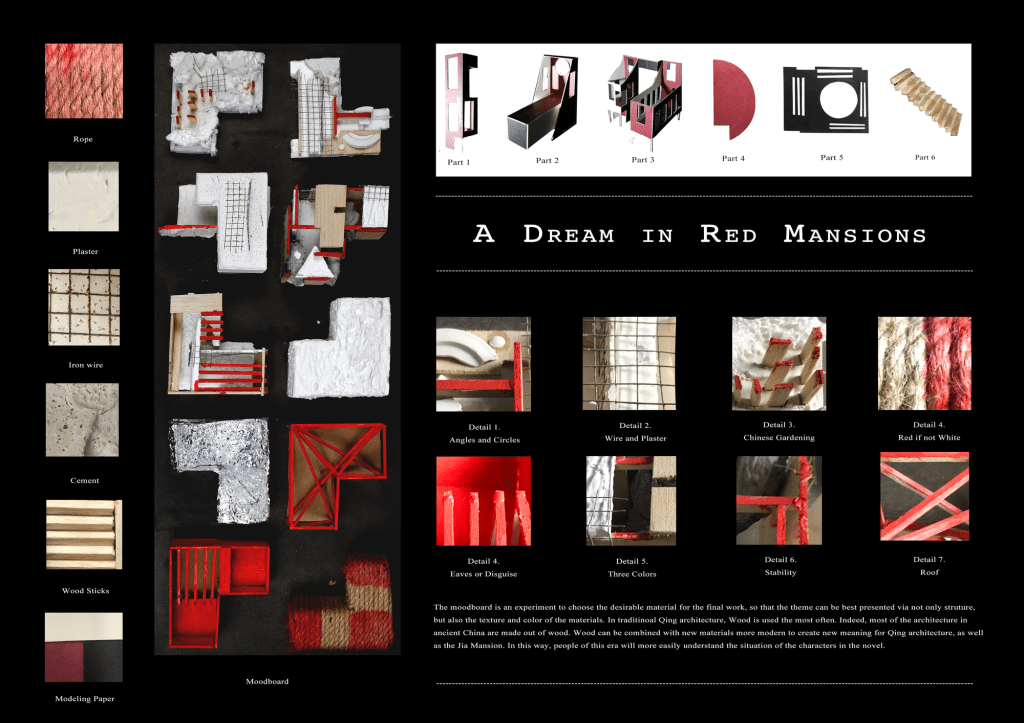
2019. Photoshop, Wood, Plaster, Cement, Rope, Acrylic, Wire, Paper.
A Dream in Red Mansions is most commonly displayed in the form of Kunqu Opera as they were all from the Qing Dynasty. The stage settings in Kunqu Operas tried to simulate the environment of Jia Mansion so the stories could reappeared exactly like the novel. Since the Jia Mansion was only in the author Cao Xueqing’s imagination, the structure and interior of the mansion can only be learned from Qing paintings and architectures. The most common furnitures were folding screens, tables, living room chairs, and beds. Folding screens disguise everything, just like Jia Mansion, a battlefield where people competed with family members. Jia Mansion’s interior are square. The excerpt I chose to create a stage to retell the story is Hidden Sword in Conversations Kills You Er by Forcing Her to Swallow Gold to Death.
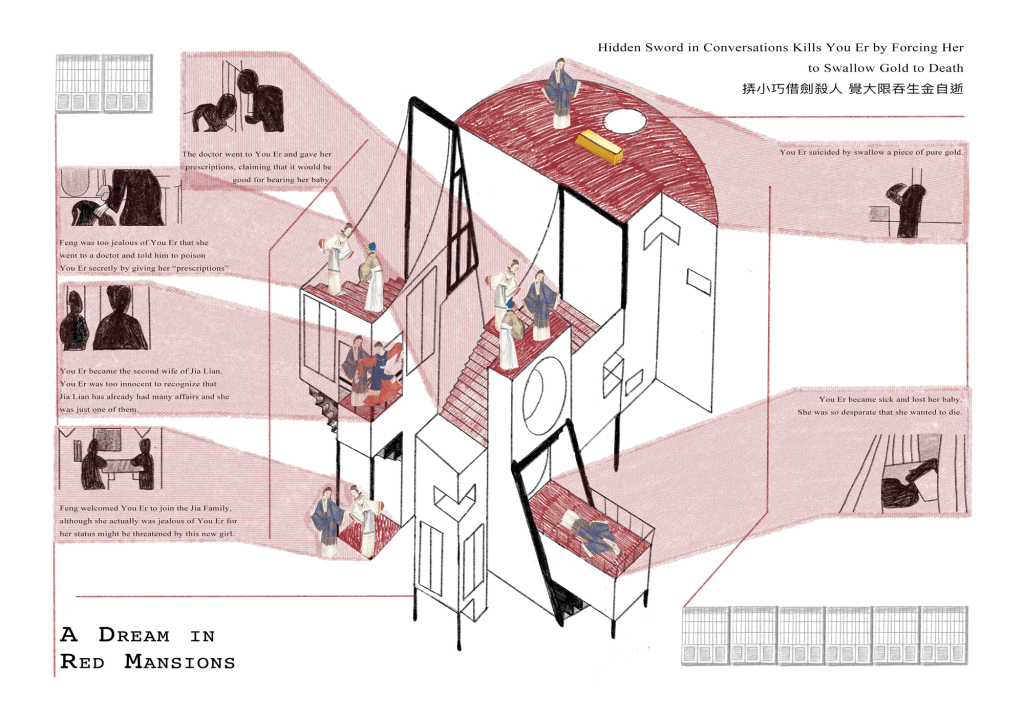
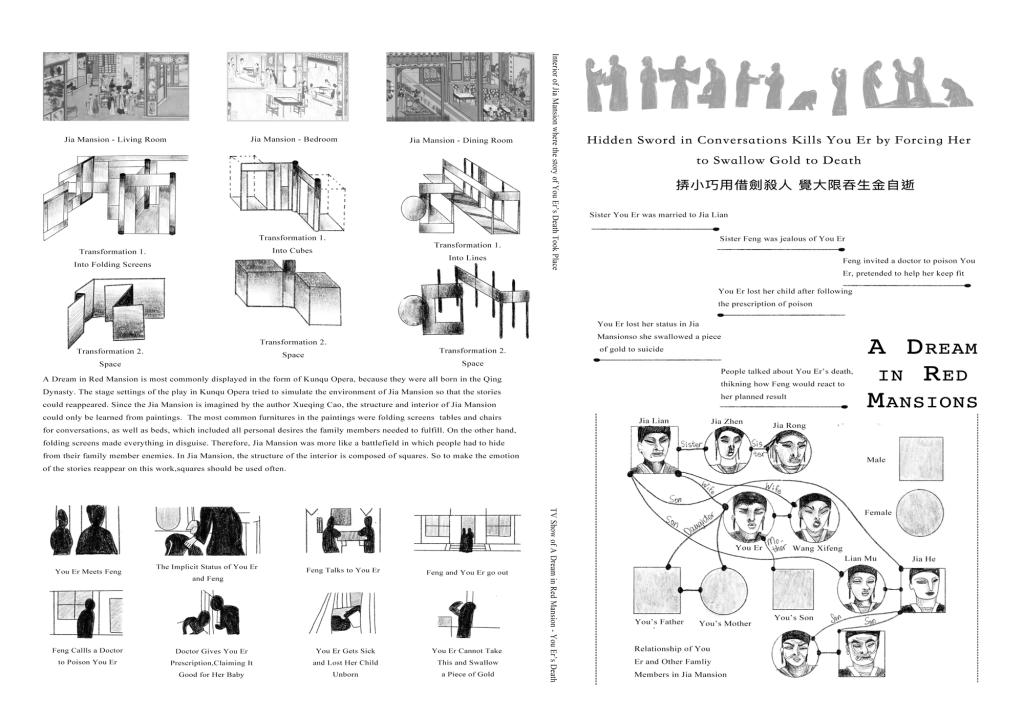
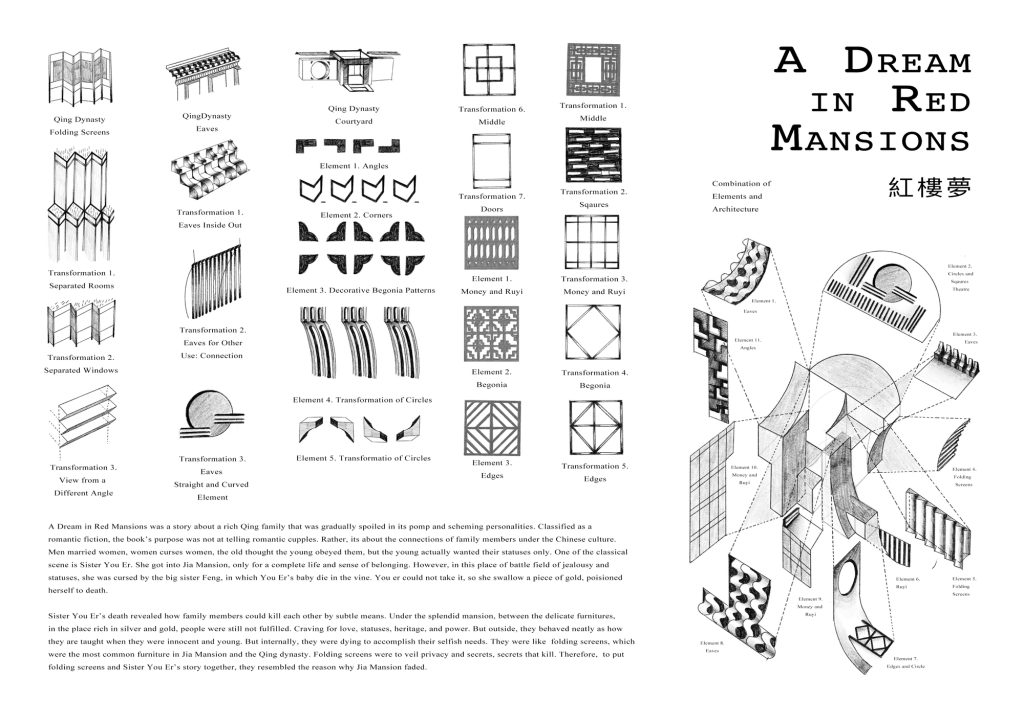
A Dream in Red Mansions was a story about a rich Qing family that fell into its scheming behaviours. Classified as romantic fiction, this piece’s purpose was not about romance. It investigated connections between family members in Chinese culture. Men married women, women cursed women, and the elderly forced the young to obey, but the young fought back. One of the classical characters was You Er. She entered Jia Mansion for a complete life and a sense of belonging. But in this battlefield of jealousy and status, she was cursed by the big sister Feng, and You Er’s baby died in the vine. You Er could not bear it, so she swallowed a piece of gold to poison herself to death.
You Er’s death revealed how family members kill each other subtly. Under the splendid mansion, between delicate furniture, in a place rich in silver and gold, people were still unfulfilled but craved love, status, heritage, and power. On the surface, they behaved neatly, like how they were taught in childhood. Internally, they were dying to accomplish selfish needs. They were folding screens, veiled secrets that killed. The folding screen-like people eroded Jia Mansion.
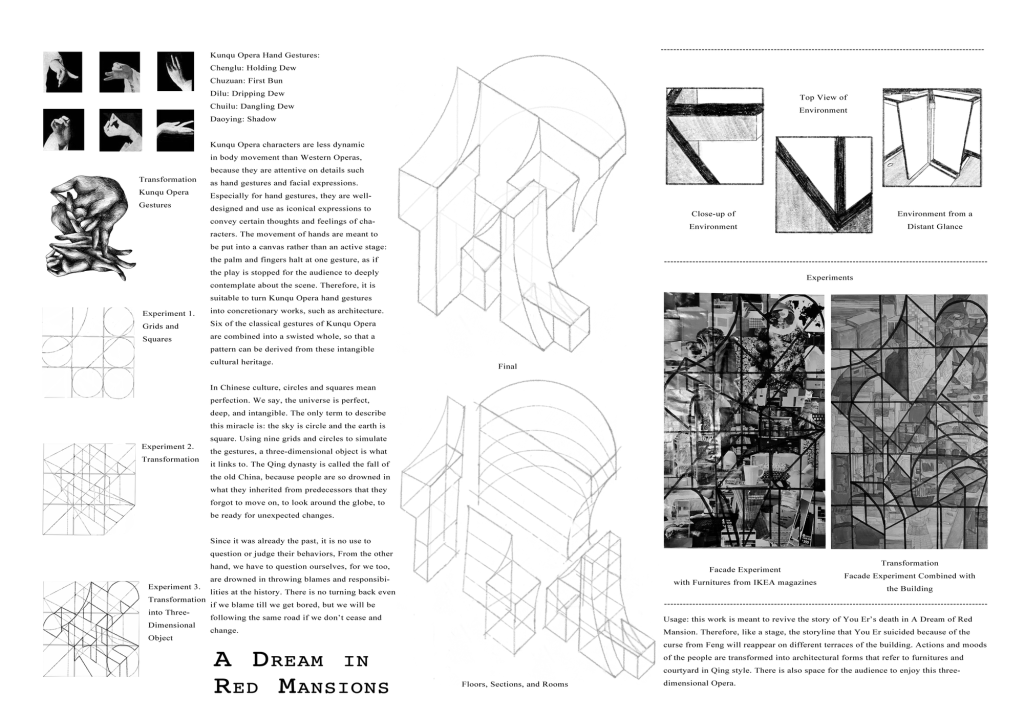
Kunqu Opera characters are less dynamic in body movements than Western Operas, but they are more attentive to details like hand gestures. They are well-designed to perform iconic expressions to convey the thoughts and feelings of actors. The hand gestures are meant to be put into a canvas: the palm and fingers halt at one gesture as if the play is stopped for audiences to contemplate the scene. I turn Kunqu’s hand gestures into architectural forms. Six hand gestures are combined into a twisted whole.
In Chinese culture, squares and circles suggest perfection. The sky is circular, and the land is square. I use grids and circles to recreate gestures.
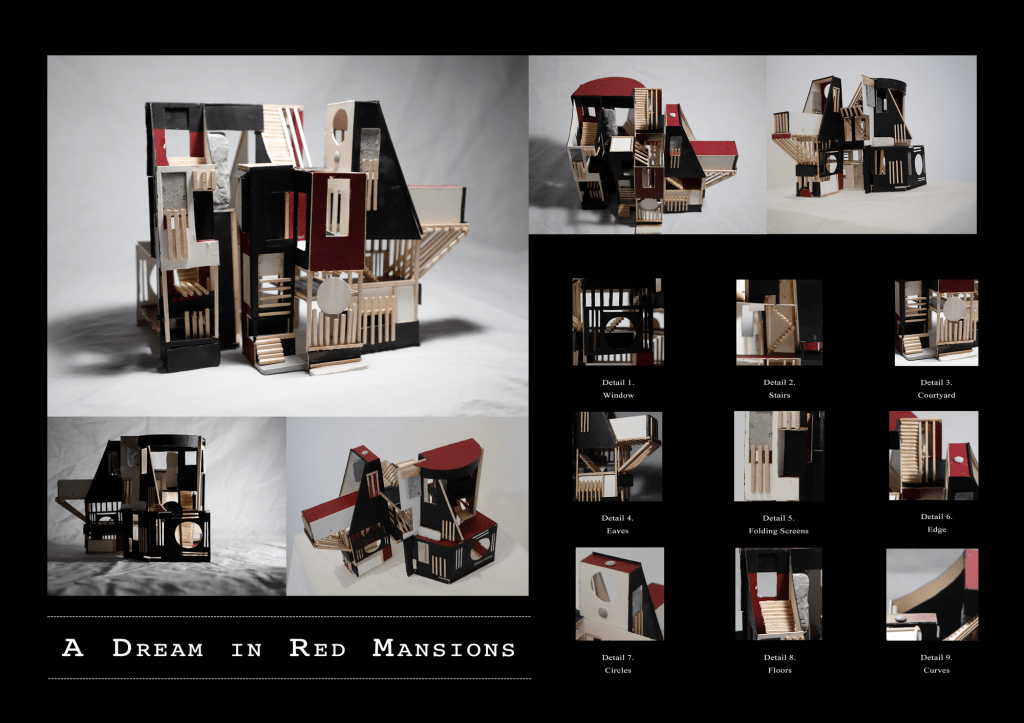
The final model revives the story of You Er’s death in A Dream in Red Mansions. The storyline reappears on different terraces of the stage. Actions and moods of character are transformed into architectural forms referring to Qing furniture and courtyards. Audiences can walk around the stage.
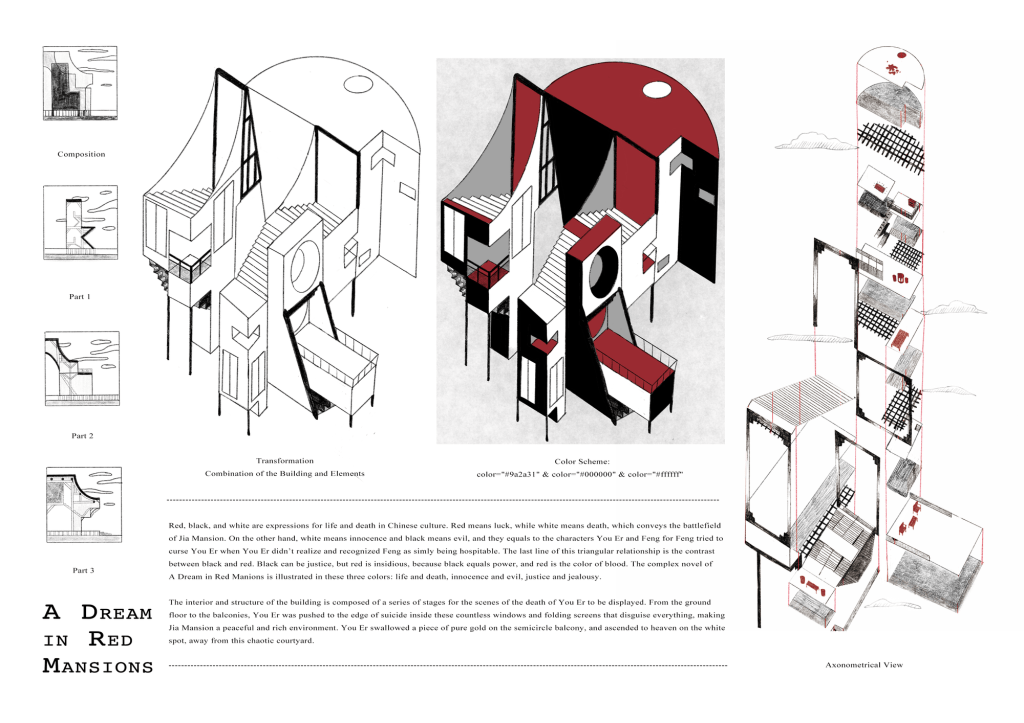
Red, black, and white are expressions of life and death in Chinese culture. Red means luck, white equals death, and they tell the battlefield in Jia Mansions. On the other hand, white also means innocence, and black equals evil, so they perform You Er and Feng. Lastly, black can be justice, while red is insidious. The complex fiction is illustrated in these three colours: life and death, innocence and evil, and justice and jealousy.
 Siyun Sun